
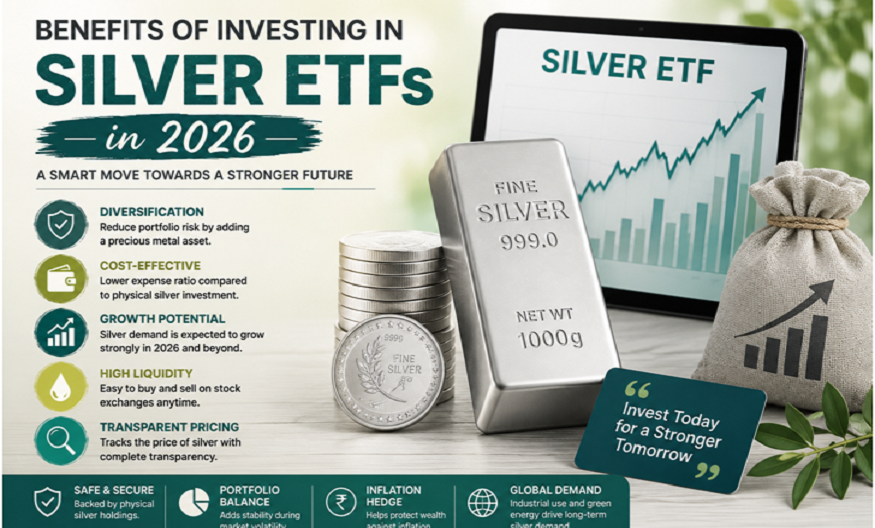
Silver Is Having Its Moment Again
Okay, so let’s just get straight into it. Silver has always played second fiddle to gold, right? The flashier cousin gets all the magazine covers, the Twitter threads, the dinner party conversations. But here we are in 2026, and silver is quietly doing something remarkable. It’s showing up. Consistently. And if you’ve been sleeping on silver ETFs, now might genuinely be the time to wake up and pay attention.
Now, here’s the thing. A lot of everyday investors feel intimidated by commodities. They think you need a trading desk, or some Bloomberg terminal blinking at you from three monitors, to actually make silver work in a portfolio. That’s just not true anymore. Products like Tata silver etf have made the whole process stupidly accessible, the kind of thing you can start exploring from your phone while waiting for your chai to cool down.
What Even Is a Silver ETF, and Why Should You Care?
Let’s slow down for a second and talk about fundamentals, because I think a lot of people skip this part and then wonder why they feel lost. A silver ETF, exchange-traded fund, is essentially a basket that tracks the price of silver without you needing to physically buy bars and stash them under your bed. You buy units on the stock exchange like you would any share. Simple.
Read More: Smart Ways to Evaluate and Select ETFs on the National Stock Exchange
The price moves with silver. When silver goes up, your ETF units go up. When it dips, they dip. No storage fees, no purity worries, no awkward calls to a bullion dealer. The whole thing sits neatly in your demat account. And honestly, that convenience alone has attracted a whole new generation of investors who would have previously never touched commodities with a ten-foot pole.
The Industrial Demand Story Is Quietly Massive
Here is where silver gets genuinely interesting, and I mean that without any exaggeration. Gold is mostly a store of value and jewellery. Silver? Silver does all of that AND works a second job. It is one of the most electrically conductive materials on earth, which makes it indispensable in solar panels, electric vehicles, semiconductors, and medical devices.
Think about where the world is headed. The global push toward clean energy is not slowing down. Every solar panel installed uses silver. Electric vehicle production keeps climbing. The electronics industry devours the metal. And supply? Silver mining hasn’t kept pace. You’re looking at a structural demand-supply gap that analysts have been quietly flagging for a couple of years now.
This is not speculation, it’s arithmetic. When industrial consumption keeps rising and mine output stays flat or drops, prices tend to respond. And when silver prices respond, well, your ETF responds right along with them.
The Inflation Hedge That Actually Pulls Double Duty
Hold on, let me think about that for a moment, because this is worth unpacking properly. When people talk about hedging against inflation, gold gets the headline. But silver historically keeps pace with inflation too, and sometimes surpasses it, especially during periods when industrial activity is humming alongside economic uncertainty.
We have had a rollercoaster few years globally. Supply chain disruptions, geopolitical tensions, currency volatility across emerging markets. In that environment, real assets tend to hold value better than paper ones. Silver ETFs let you participate in that protective quality without the complexity of owning physical silver. You are essentially buying a hedge AND a growth story wrapped in one instrument.
Now, some people will ask: why not just buy gold? Fair question. The honest answer is that silver tends to be more volatile in the short term, which sounds like a negative but is actually an opportunity if you are okay with a little turbulence. The upside swings can be sharper. For investors with a medium-to-long horizon and a stomach for some price movement, silver can outperform.
Liquidity and Transparency Make Life Easier
One thing that does not get discussed enough is how liquid silver ETFs have become in India specifically. You can buy and sell units on the exchange throughout the trading day. No lock-in periods. No exit loads in most cases. No waiting for some fund manager to redeem your units at end-of-day NAV if you are in a hurry.
Read More: Tata Share and TCS Share Price: Easy to Understand Without the Stress
Price discovery is completely transparent too. The net asset value of a silver ETF tracks publicly available silver prices, so you always know what you’re getting into. There’s no mystery, no hidden valuation methodology. Just silver price, minus a small expense ratio, reflected in your units. That kind of clarity is something investors genuinely value, especially when markets get choppy and you want to make quick decisions.
Diversification Without the Drama
Let me be direct: putting everything into equities is a gamble, not a strategy. Tata silver etf and similar products exist precisely because thoughtful investors understand that diversification is not just a textbook concept, it is actual protection. When stock markets correct sharply, as they inevitably do, assets that don’t move in lockstep with equities provide a cushion.
Silver has a relatively low correlation with equity indices. It does not always move in the same direction as the Nifty or the Sensex. During equity selloffs, particularly those triggered by risk-off sentiment, silver often holds steady or even appreciates as investors rotate toward safe haven assets. Building even a modest silver ETF position into a portfolio, say 5 to 10 percent, can meaningfully reduce overall volatility without dragging down returns.
The Tax Angle Worth Knowing
Here is a practical point that sometimes gets glossed over in the excitement of talking about silver prices. In India, gains from silver ETFs are treated similarly to debt fund taxation. Long-term capital gains kick in after a holding period, and the rates are generally more favourable than short-term gains. For investors in higher tax brackets, structuring silver ETF holdings with tax efficiency in mind can actually enhance net returns meaningfully.
This is the kind of thing worth sitting down and mapping out with your accountant, or at least running through a basic calculator. The numbers can surprise you, in a good way.
2026 Specifically: Why This Year Feels Different
So why are we talking about this now, in 2026, rather than three years ago? Partly because the global macro environment has shifted. Central banks in multiple economies have been recalibrating interest rate policy. When real interest rates are lower, the opportunity cost of holding non-yielding assets like silver drops. That’s a tailwind.
Partly it’s because the energy transition is no longer a distant promise. It’s happening. Governments are spending money on solar infrastructure, EV adoption is accelerating in major markets, and the silver supply pipeline simply has not kept up. Partly it’s because retail investors in India specifically have grown significantly more comfortable with ETF products over the last few years. The infrastructure is better, the awareness is higher, and the entry barriers are genuinely low.
When you keep an eye on Tata silver etf share price over the past several months, the trajectory tells a story of sustained interest and upward momentum, not the volatile spikes and crashes that commodity sceptics often expect.
A Few Things to Keep in Mind Before You Jump In
Look, nothing is ever a guaranteed win. Silver can and does experience sharp corrections, sometimes 10 to 15 percent in a matter of weeks, when risk appetite globally returns to equities or when industrial demand data disappoints. If you cannot sleep at night watching your portfolio move around, silver ETFs at a large allocation are probably not for you.
But for investors who understand that short-term volatility is the price you pay for long-term opportunity, and who are looking for a liquid, transparent, cost-effective way to gain commodity exposure, silver ETFs tick an awful lot of boxes.
The Bottom Line, If There Is One
Here is where I land on all of this. Silver ETFs in 2026 represent one of the more interesting entry points for a thoughtful, diversified investor. The industrial demand story is real and growing. The macroeconomic environment offers genuine tailwinds. The product itself has matured enough that you’re not navigating some obscure corner of the market.
Tracking Tata silver etf share price as a reference point for how silver ETFs are performing in the Indian market gives you a clear signal about where broader sentiment sits. And right now, that signal is worth paying attention to. Not blindly, not with your entire portfolio, but with the kind of calm, curious confidence that comes from actually understanding what you own and why.
Silver waited a long time to get its moment. It might just be arriving now.