
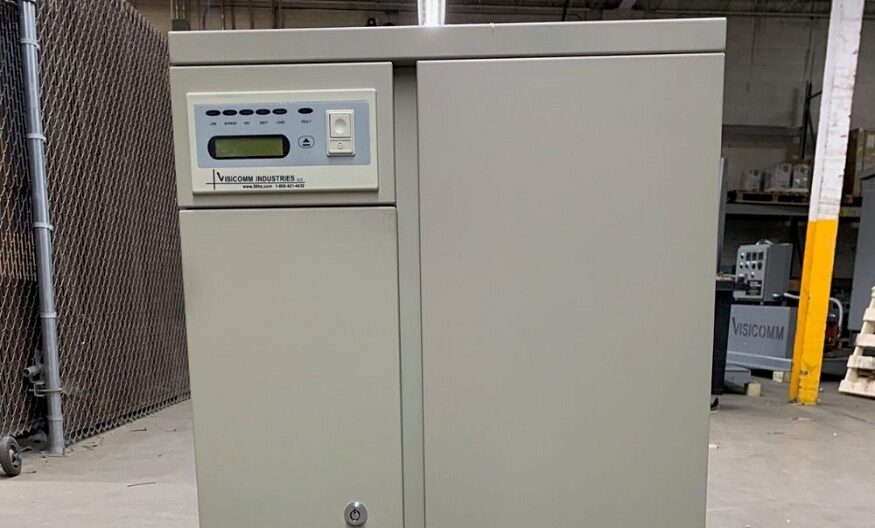
In the rapidly evolving world of industrial power electronics, the demand for stable, reliable, and precise electricity has never been higher. As manufacturing becomes more globalized, facilities often find themselves needing to power equipment designed for international standards that do not match the local utility grid. While solid-state electronic converters have become common, the rotary frequency converter remains the preferred choice for heavy-duty industrial applications. By utilizing a time-tested mechanical approach to power conversion, these systems offer a level of durability and electrical purity that is difficult for purely electronic systems to match. Understanding the specific benefits of the rotary design is essential for engineers and facility managers who must protect expensive machinery and ensure uninterrupted production.
Total Electrical Isolation and Power Quality
The primary characteristic that sets a rotary frequency converter apart from its static counterparts is the physical separation between the input and output power. A rotary system consists of an electric motor driven by the utility power, which is mechanically coupled via a shaft to an alternating current generator. Because there is no direct electrical path between the utility grid and the load, the system provides total electrical isolation. This mechanical link acts as a natural barrier against the many “impurities” found in standard utility power, such as harmonic distortion, voltage spikes, and transient surges.
For industries that operate sensitive laboratory equipment, high-end medical imaging devices, or precision CNC machinery, this isolation is invaluable. The generator side of the rotary converter produces a clean, true sine wave that is independent of the fluctuations occurring on the input side. This means that if the local grid experiences a sudden spike or high-frequency noise caused by other heavy machinery in the area, the equipment powered by the rotary converter remains completely unaffected. This “clean” power environment reduces the likelihood of electronic glitches and ensures that precision instruments maintain their calibration for longer periods.
Superior Durability in Harsh Environments
Industrial environments are often unforgiving. Factory floors are frequently subject to high temperatures, dust, vibration, and oily mists that can wreak havoc on sensitive circuit boards and microprocessors. Static converters, which rely heavily on delicate semiconductors and cooling fans for their internal electronics, can struggle to maintain reliability in these conditions. In contrast, the rotary frequency converter is built using the same heavy-duty principles as industrial motors and generators.
These units are constructed with rugged iron frames, high-quality copper windings, and robust bearings designed for decades of continuous operation. There are no delicate power transistors to burn out or complex software systems to crash. Because they are mechanical in nature, rotary converters are much more resilient to the thermal stresses of a busy factory. As long as they receive basic periodic maintenance, such as bearing lubrication and occasional cleaning, these machines can reliably serve an industrial facility for thirty years or more, providing a much lower total cost of ownership compared to electronic units that may need replacing every decade.
Handling High Inrush Currents and Motor Starting
One of the most significant challenges in industrial power management is handling the massive surge of electricity required to start large motors. Many machines require five to ten times their normal operating current during the initial start-up phase. For electronic frequency converters, these “inrush” currents can be problematic, often requiring the unit to be significantly oversized just to handle the first few seconds of a machine’s operation. If the converter is not large enough, the voltage will sag, and the machinery may fail to start or trip the system.
Rotary frequency converters excel in these high-demand scenarios. The rotating mass of the motor-generator set acts as a mechanical flywheel, providing a reservoir of kinetic energy. When a heavy load is applied suddenly, this stored energy helps maintain the speed and voltage of the generator, allowing the system to handle significant surges without a drop in performance. This inherent “overload” capacity makes rotary converters the ideal choice for powering large pumps, compressors, and ventilation systems that require robust starting torque.
Conclusion
The rotary frequency converter is a testament to the idea that sometimes the most reliable solution is a mechanical one. While digital technology continues to advance, the physical laws governing electromagnetism and rotating mass provide a level of stability and protection that is perfectly suited for the rigors of heavy industry. By providing total electrical isolation, unmatched physical durability, and the ability to handle the most demanding motor loads, these machines remain a cornerstone of industrial infrastructure. For any facility where downtime is not an option and the protection of expensive equipment is a priority, the investment in a rotary system offers long-term peace of mind and consistent performance.